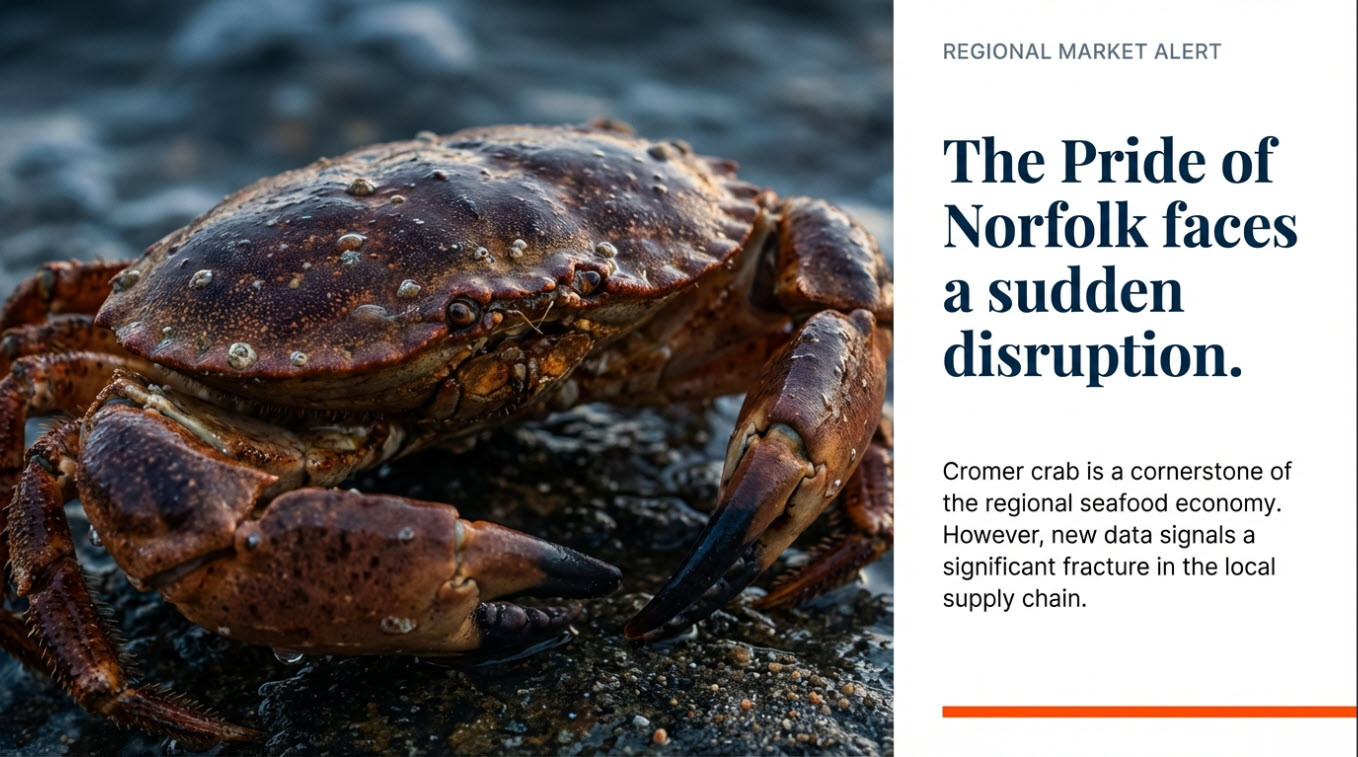
Cromer Crab Catches are in decline 
The decline in Cromer crab landings is the latest chapter in a wider collapse of North Norfolk’s fishing industry — one driven as much by politics as by the sea itself.
For decades, local fishermen were constrained by the EU’s Common Fisheries Policy, which prioritised large-scale fleets and quota trading over small, sustainable inshore boats. Under this system, many British fishermen were left with limited access to their own waters, while foreign vessels were able to take significant catches. The damage to coastal communities like Cromer, Sheringham and Wells was long-lasting, with boats tied up, skills lost and younger generations forced out of fishing altogether.
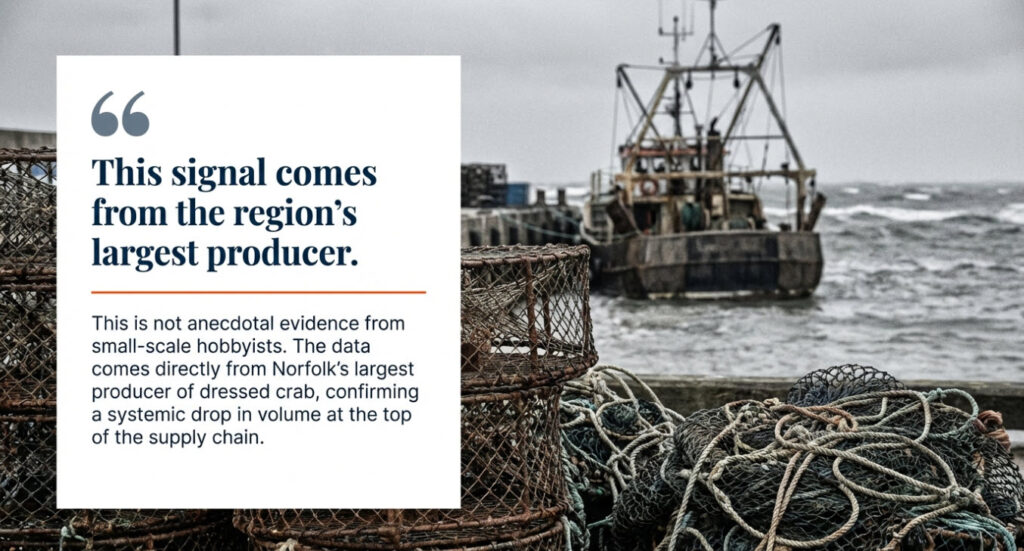
Although the UK has now left the EU, the legacy remains. Quota imbalance, reduced fleet capacity and weakened local infrastructure mean North Norfolk fisheries are still struggling to recover.
More recently, offshore wind farm developments have made matters worse. Traditional crab grounds have been closed off or disrupted, seabed habitats disturbed, and fishermen pushed into smaller, less productive areas. Decisions have often been taken centrally, with minimal regard for the cumulative impact on small coastal fleets.
Click the image below to listen to the audio from BBC Radio Norfolk
Add to this rising fuel costs, heavy regulation, marine protected zones without proper compensation, and declining shore-based processors, and it is clear why North Norfolk fisheries are in decline.
This is why Reform UK argues that real reform is needed: reclaiming control of Britain’s waters in practice, not just in name; rebalancing quotas towards small boats; and putting coastal communities first when major developments are approved.
Cromer crab is more than a local delicacy — it represents a way of life. Without bold reform and genuine local control, North Norfolk risks losing one of its oldest industries for good.
If you want assistance with this article, please Contact Us
Promoted by Jason Patchett Millbank Tower, 21-24 Millbank, London, England, SW1P 4QP, United Kingdom


